The Rxcript way
Write it once. After that, reissue and tweak.
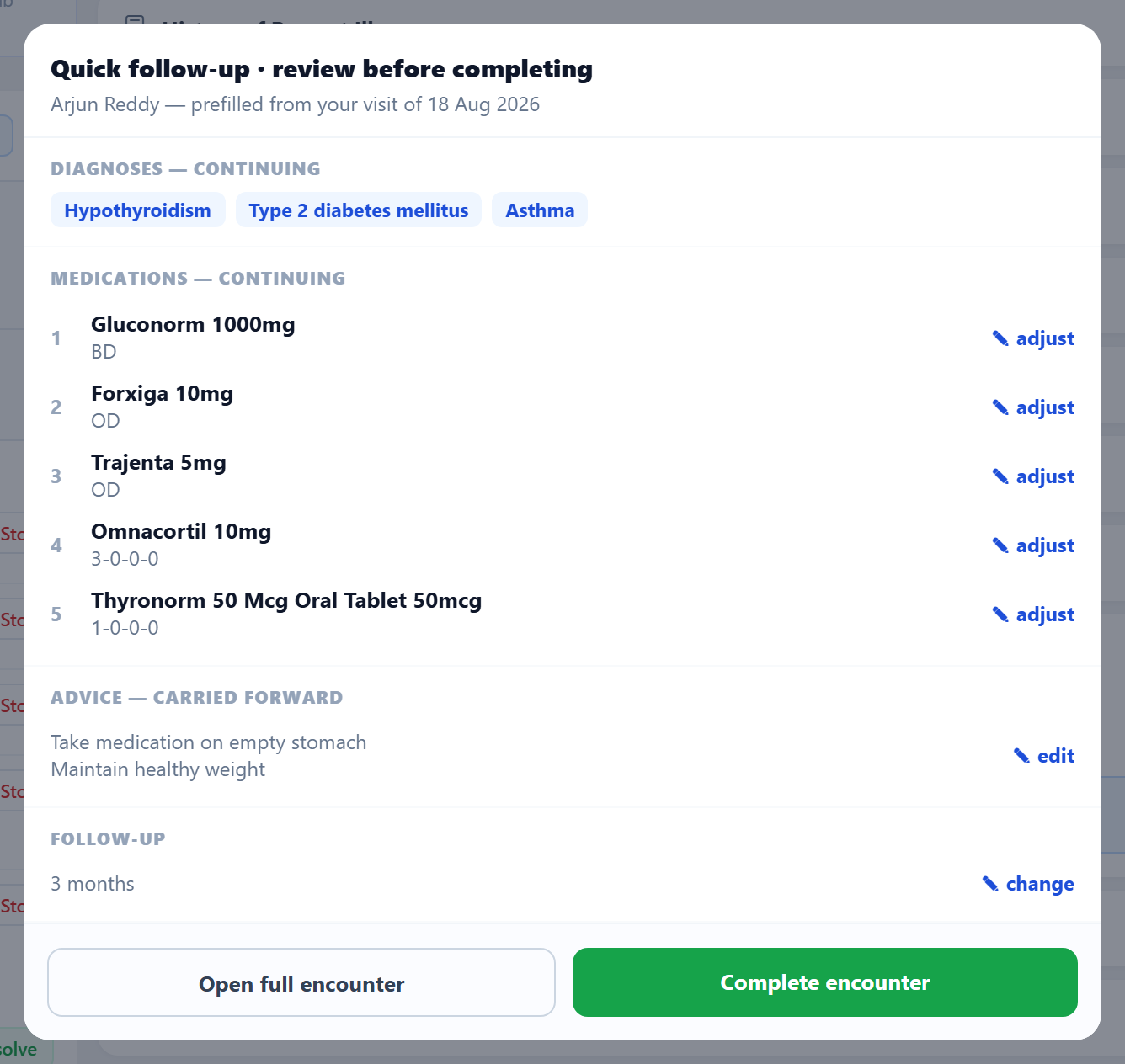
One tap produces this. Five continuing medicines with doses, the advice and the follow-up interval - carried forward, ready to check and complete. Watch it in the app →
Aprilfirst visit
Write the full prescription - once · ~2 min
Enter the five diagnoses and eight medicines with dosing chips. Save. It prints clean, branded, and is stored against the patient forever.
May~30 sec
Open the patient → Reissue → change one dose
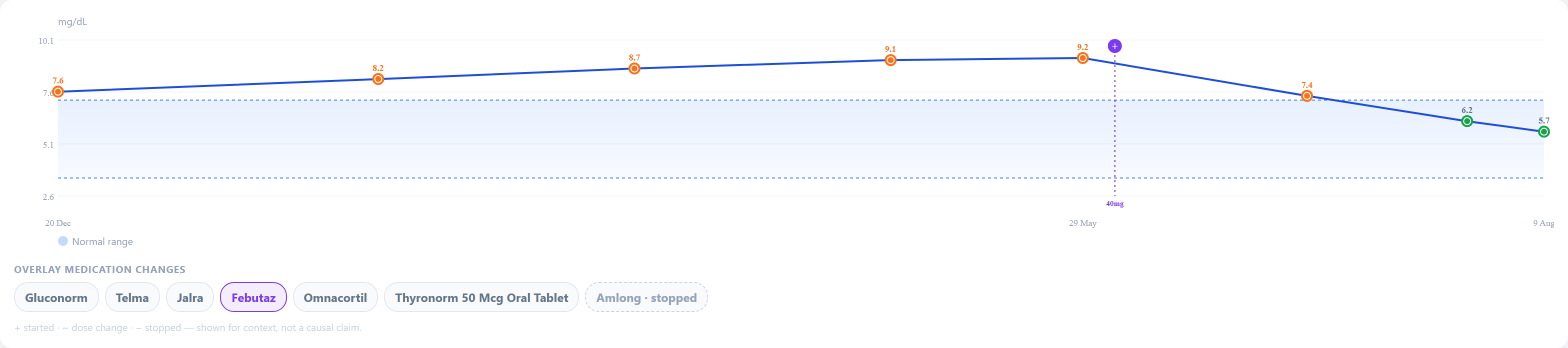
Everything carries forward. Bump Febuxostat 30 → 40 mg inline, and print. No re-writing diagnoses, no re-writing seven unchanged medicines.
June~30 sec
Open the patient → Reissue → stop one medicine
Tap Stop on Finerenone with a reason, and print. The continuing medicines and diagnoses are already there.
Same care. Same clinical detail. ~90% less effort - and nothing accidentally left out.